Searching for salumi near me is often the easy part. The harder part begins when you reach the counter and see several cured meats that look similar but can taste, feel and serve very differently.
If you are buying salumi for the first time, you do not need to know every Italian product name before you walk into the butcher. A few practical details about what you are making, how many people you are feeding and the flavours you enjoy can give the butcher enough information to point you in the right direction.
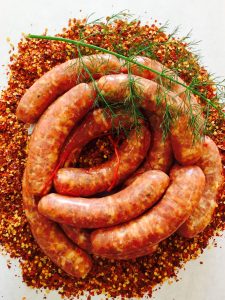
Salumi is a broad term covering different prepared Italian-style meat products rather than one particular type of salami. Depending on the product, you may encounter whole-muscle cured meats, seasoned salami, cooked smallgoods and products intended to be eaten or prepared in different ways. Campisi Butchery’s current range, for example, includes smallgoods such as salami, prosciutto, coppa, pancetta and guance.
The useful approach is to choose according to the meal rather than selecting whichever name sounds most familiar.
Is it for a platter, sandwich or recipe?
The first useful question is not necessarily, “Which salumi is best?” It is, “What am I using it for?”
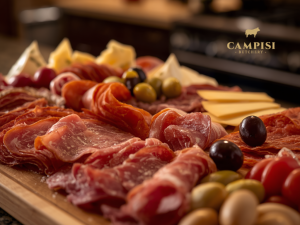
A platter for a family lunch may benefit from several contrasting products that guests can pick up easily. Sandwiches may call for slices that fold or layer well. Cooking with pancetta or another product creates a different requirement again.
If you tell the butcher that you are preparing an antipasto starter, filling focaccia, making sandwiches or buying an ingredient for a recipe, they can recommend salumi meat that fits that purpose instead of simply pointing you towards the most popular product.
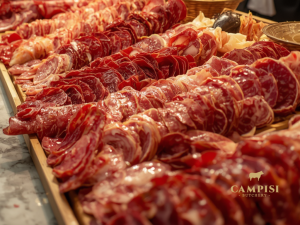
Slice thickness can also change with the application. Thin slices can work well when meat is being folded onto a platter, while a more substantial cut may sometimes suit sandwiches or a particular recipe.
This is why explaining the final meal is more useful than asking for “a bit of everything”.
How many people are you serving?
Guest numbers are another important part of the conversation.
There is no single amount of salumi that works for every gathering because the meat may be a small starter at one event and a major part of the meal at another.
If salumi will sit alongside cheese, olives, bread, vegetables and several other dishes, guests may eat less cured meat. If the main meal is essentially salumi, cheese and bread, you will usually need a more generous quantity.
Tell the butcher how many adults and children you expect, what else will be served and whether the food is intended as a starter or a more substantial meal.
This also helps reduce unnecessary leftovers.
When searching for cured meats near me for a party, contacting the butcher before the event can be worthwhile, particularly if you need larger quantities or specific products.
Ask What the Different Salumi Actually Taste Like
Knowing the Italian name does not necessarily tell a first-time buyer whether they will enjoy the flavour.
Ask the butcher to describe each option in ordinary terms.
You might prefer something mild and delicate, something richer with more visible fat, or salumi with stronger pepper, garlic, chilli or other seasoning.
Different types of salumi can also vary considerably in texture. Some are soft and delicate, while others are firmer or more substantial. Products made from whole cuts of meat can feel quite different from seasoned salami made from chopped or minced meat.
For example, prosciutto, coppa and salami do not provide identical eating experiences, even though all can appear on the same antipasto table.
If you are buying several varieties, try to avoid choosing four products with almost identical flavour profiles. A little contrast generally makes the selection more interesting.
Which products suit someone trying salumi for the first time?
There is no rule saying your first Italian salumi purchase needs to include the strongest or most unusual product at the counter.
Tell the butcher what you already enjoy.
If you like mild deli meats, say so. If you enjoy chilli and heavily seasoned food, mention that. If fatty textures are not your preference, that is also useful information.
This allows the recommendation to start with your taste rather than with assumptions about what a “proper” salumi selection should contain.
You can also ask whether a small amount of two or three different products would make more sense than purchasing a large quantity of one unfamiliar meat.
For someone new to salumi, variety can be useful because it lets you discover what you actually enjoy before buying more next time.
Find Out How Each Salumi Should Be Sliced
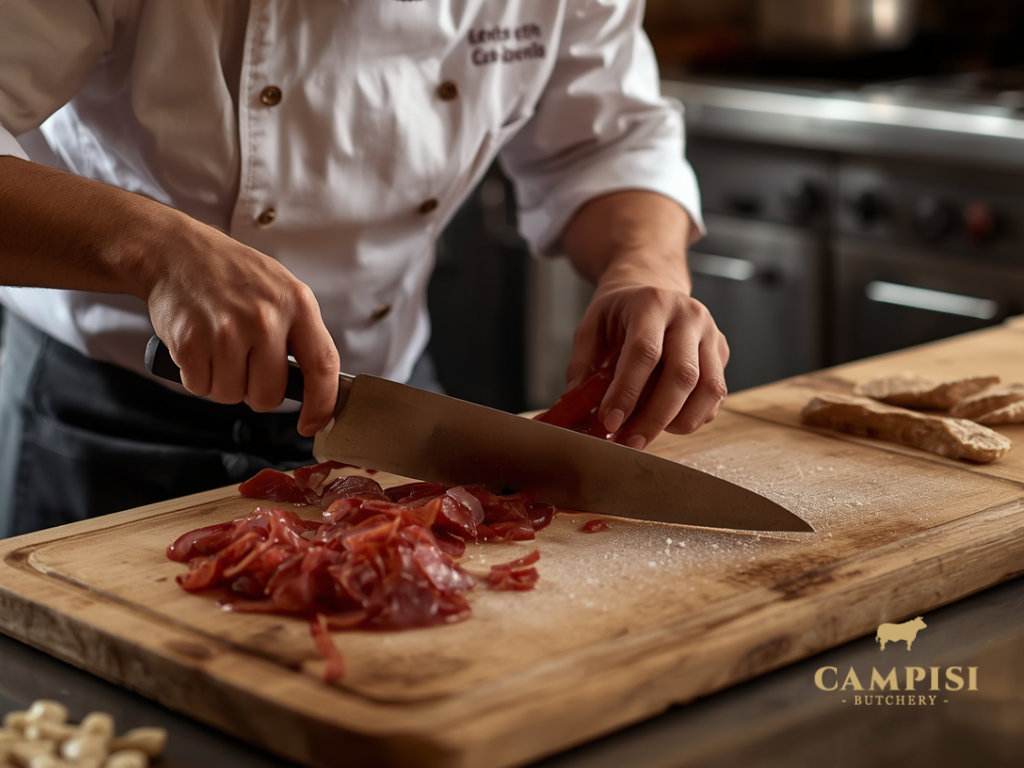
Should it be sliced thinly or left slightly thicker?
Slice thickness can make a noticeable difference to how cured meat feels when you eat it.
Delicate products are often enjoyable when sliced thin enough to fold easily, while firmer salami may suit a slightly different cut depending on how it will be served.
Rather than requesting the same thickness for every product, ask what normally suits each one.
A butcher handling the product regularly can also consider its texture and intended use.
If you are comparing salumi near me specifically for a platter, tell the butcher that guests will be picking up the slices individually. If it is going into a roll or sandwich, explain that instead.
The useful question is not simply “thin or thick?” but “what thickness works for this product and this meal?”
Tell the butcher how you intend to serve it
Serving method gives the slicing request context.
Prosciutto folded over bread, salami arranged on an antipasto plate and cured meat layered inside a sandwich do not necessarily need to be prepared identically.
If you intend to cook with the product, say that as well.
Buying first and deciding how to use it later can work, but explaining the purpose while it is being sliced gives you a better chance of taking home something ready for the meal you actually have planned.
For a larger order, it can also be useful to ask whether the meat should be separated or packaged in a way that makes serving easier.
That kind of practical detail becomes especially valuable when preparing food for an event rather than a normal household lunch.
Ask About Ingredients, Preparation and Product Details
First-time buyers should feel comfortable asking exactly what they are purchasing.
Ask what type of meat is used and how the product is seasoned. If you dislike chilli, strong garlic, fennel or another flavour, mention that before choosing.
This is also important if someone eating the salumi has an allergy or dietary requirement. Do not assume the ingredients from the product’s name alone. Check the label or ask the butcher for the relevant product information.
The amount of visible fat may also matter to you.
Some people specifically enjoy richer, well-marbled cured meats, while others prefer something leaner. There is no universally correct choice; it depends on taste and how you intend to serve it.
The butcher can explain the differences much more easily if you describe what you like rather than asking which product is “best”.
Is it cured, cooked or intended for cooking?
Do not assume that every product sitting near the deli or smallgoods counter should be handled or eaten in exactly the same way.
Ask whether the product is ready to eat, how it should be served and whether any cooking instructions apply.
Once you take the product home, follow the storage directions provided with it. NSW Food Authority guidance advises consumers to follow specific storage instructions on food labels and to keep home refrigerators below 5°C. Ready-to-eat foods should also be kept protected from contact with raw meat to reduce cross-contamination.
Food Standards Australia New Zealand similarly advises following the manufacturer’s storage instructions because storage requirements and expected shelf life depend on the particular food.
For a first-time buyer, asking, “How should I store this and how soon should I use it?” is therefore a useful final question before leaving the shop.
Work Out How Much to Buy Without Overordering
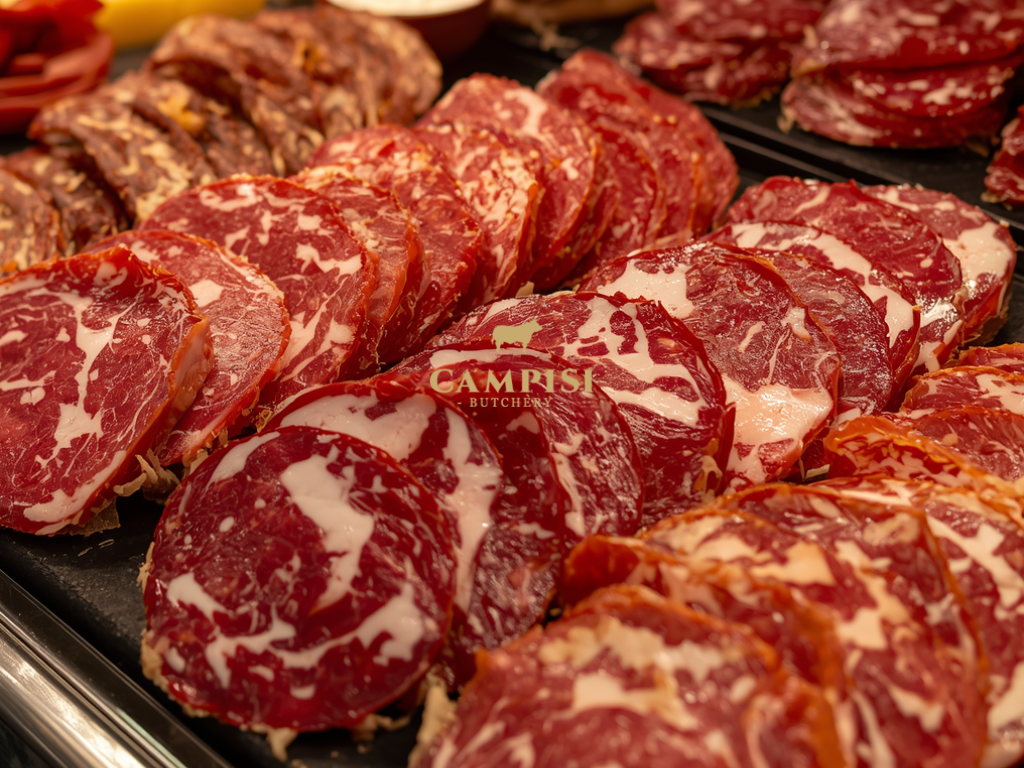
Ask for a quantity based on the occasion
It can be tempting to buy salumi by appearance alone, especially when several products look appealing.
Instead, describe the occasion.
A light antipasto before pasta will need a different amount from a long Sunday lunch where cured meats, cheeses and bread are the main attraction.
The butcher does not need a complicated catering plan. Guest count, type of meal and the other foods being served are enough to start the discussion.
If you are serving salumi alongside substantial amounts of cheese, dips, bread, vegetables and another main meal, tell them.
If the platter is expected to carry most of the meal, say that instead.
This approach is more practical than relying on one fixed quantity per person because people and menus vary considerably.
Consider how many varieties you are buying
The number of salumi varieties also changes how much you need of each product.
If you buy one type, you may need a reasonable amount of it. If you select four contrasting products, you can usually divide the overall quantity between them rather than buying a full serving of every variety.
This is where the keyword salumis sometimes appears in online searches, although “salumi varieties” or “types of salumi” is more natural English.
Think in terms of the total selection.
For example, you might want something mild, something richer and one stronger or spicier option. The butcher can then divide the quantity according to your guest numbers and serving style.
That gives you variety without filling the table with more meat than the group is likely to eat.
Choose the Right Salumi for Your Taste and Meal
Price is useful information, but it should not be the only reason you choose one product over another.
A more expensive cured meat is not automatically the right choice for a sandwich, just as the least expensive option is not necessarily the best match for a carefully prepared antipasto platter.
Consider flavour, texture, slice thickness and how prominent the product will be in the meal.
A strongly flavoured salumi may work beautifully as a small part of a mixed platter but overwhelm a sandwich if used heavily. A delicate product may be lost if paired with several very strongly seasoned foods.
When searching for salumi near me, this is one advantage of buying from a butcher where you can describe what you are making instead of choosing solely from a product name.
Campisi Butchery currently lists traditional smallgoods including salami, prosciutto, coppa, pancetta and guance, giving Western Sydney shoppers several different styles to discuss at the counter.
Ask for a selection with some contrast
If you are unsure where to begin, ask the butcher to help you put together a small mixed selection.
You might explain that you want one milder product, one richer option and something with a little more seasoning.
That provides more direction than simply saying, “Give me the best salumi.”
A mixed selection can also help a group with different preferences. One person may like delicate prosciutto while another prefers a firmer, more strongly seasoned salami.
The aim is not to include every Italian salumi product available.
A smaller range that suits the people eating it is generally more useful than a large selection chosen only for variety.
This also gives first-time buyers a chance to remember what they liked and make a more confident choice on the next visit.
Know When to Contact the Butcher Before You Visit
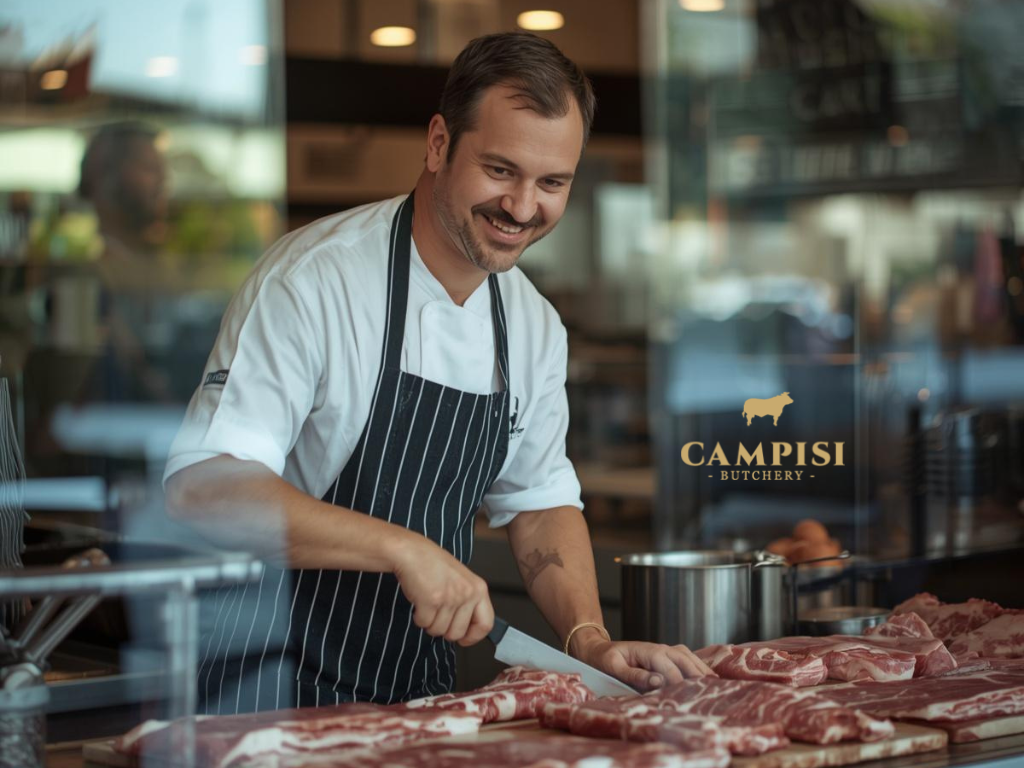
Call ahead for larger orders or particular products
For a normal household purchase, walking into the butcher and discussing the options at the counter may be enough.
Planning for an event can be different.
If you need a larger amount, a specific smallgood or particular slicing, it is sensible to contact the shop ahead of time and confirm availability.
This is especially useful around busy entertaining periods or when the product is important to the menu.
Campisi Butchery is located at 1/218 Fifteenth Avenue, West Hoxton NSW, and its current website lists its traditional smallgoods range alongside its broader fresh-meat offering.
For customers in Western Sydney looking for cured meats near me, calling before a larger gathering can make it easier to discuss the quantity and required products before collection.
Ask for guidance when you do not know exactly what to order
You do not need to arrive knowing the difference between every type of salumi.
In fact, saying, “I’ve never bought this before” can make the conversation easier because the butcher knows to start with the basics.
Tell them the meal you are preparing, how many people you are feeding, whether you prefer mild or strong flavours and whether the meat will be served on a platter, used in sandwiches or incorporated into cooking.
Campisi Butchery’s current site identifies products such as Cacciatore, salami, prosciutto, coppa and pancetta among its Southern Italian smallgoods.
Those names can sound unfamiliar when you are new to salumi, but you do not need to memorise them before visiting.
Start with the occasion and your taste.
A useful butcher conversation should leave you understanding what you have bought, why it suits your meal, how it should be sliced or served and how to store it correctly once you get home.
That is ultimately more valuable than simply searching salumi near me and choosing the first product you recognise.